Understanding the Lymphatic System
Before comparing these two treatments, it helps to understand what the lymphatic system does. Your lymphatic system is a network of vessels, nodes, and organs that runs parallel to the circulatory system. Its primary roles include:
- Draining excess fluid from tissues back into the bloodstream
- Filtering pathogens, cellular waste, and toxins through lymph nodes
- Transporting immune cells throughout the body
- Absorbing fats from the digestive system
Unlike blood, which is pumped by the heart, lymph fluid relies on muscle contractions, body movement, and breathing to circulate. When this flow is compromised — due to surgery, injury, inactivity, or disease — fluid accumulates in tissues, causing swelling (edema or lymphedema).
Manual Lymphatic Drainage (MLD)
What It Is
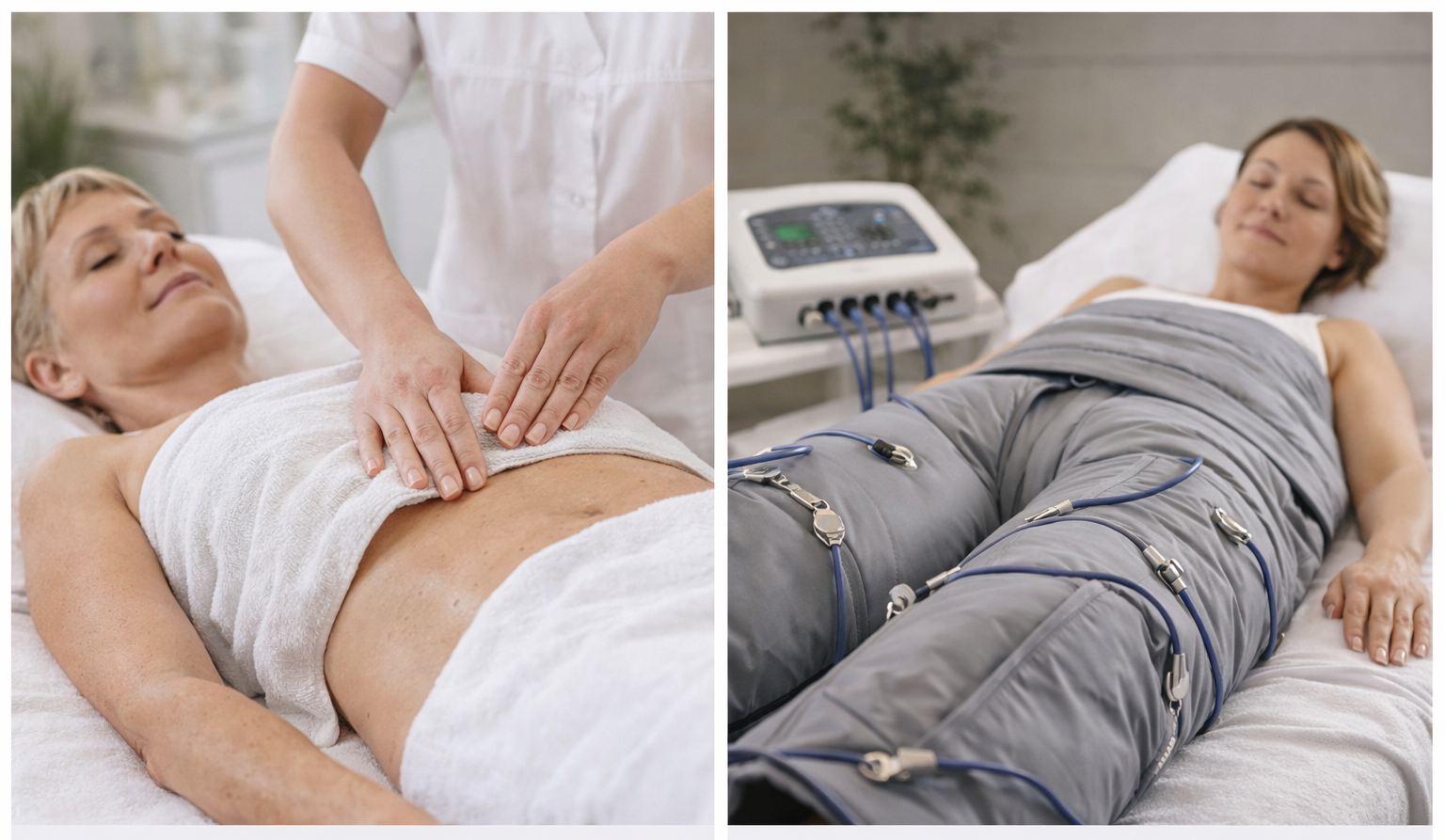
Manual lymphatic drainage is a specialized massage technique developed in the 1930s by Dr. Emil Vodder in France. Unlike conventional massage, MLD uses extremely light, rhythmic, wave-like movements that follow the anatomical pathways of the lymphatic system. The pressure is remarkably gentle — about 30–40 mmHg, roughly the weight of a teaspoon of water.
How It Works
The therapist uses precise hand movements to:
- Stretch the walls of lymphatic collectors, stimulating their natural pumping action
- Redirect lymph fluid around blocked or damaged areas toward functional lymph nodes
- Open new lymphatic pathways when primary routes are compromised
- Reduce sympathetic nervous system activity, promoting deep relaxation
Best For
- Primary lymphedema: Congenital malformation of the lymphatic system
- Secondary lymphedema: Following cancer surgery (particularly breast cancer with lymph node removal) or radiation therapy
- Post-surgical swelling: After cosmetic, orthopedic, or vascular surgery
- Face and head: MLD is the only option for facial lymphedema and sinus congestion
- Sensitive areas: Where machine compression would be inappropriate
Advantages
- Highly targeted — the therapist can adapt pressure and direction in real-time
- Suitable for sensitive, fragile, or post-surgical tissue
- Can treat areas machines cannot (face, neck, trunk, genital area)
- Deeply relaxing — activates the parasympathetic nervous system
- Can open alternative drainage pathways when primary routes are blocked
Pressotherapy (Pneumatic Compression)
What It Is
Pressotherapy uses an electronic device that inflates multi-chambered sleeves or boots placed around the limbs. The chambers inflate sequentially from distal to proximal (feet to hips, or hands to shoulders), creating a wave-like compression that mimics the body's natural lymphatic pump.
How It Works
- Multi-chambered garments inflate in programmed sequences
- Sequential compression pushes fluid centrally, from the extremities toward the trunk
- Adjustable pressure settings (typically 20–60 mmHg) allow customization
- Sessions typically last 30–45 minutes
Best For
- Heavy legs and venous insufficiency: One of the most effective treatments for chronic venous disorders
- Post-exercise recovery: Accelerates metabolic waste removal after intense physical activity
- Lipedema: A condition causing disproportionate fat deposits, often misdiagnosed as obesity
- General wellness: Reducing water retention, cellulite appearance, and leg fatigue
- Post-surgical limb edema: After orthopedic or vascular procedures on the legs
Advantages
- Covers large areas simultaneously (entire leg, both legs at once)
- Consistent, reproducible pressure throughout the session
- Can be performed without a specialized therapist once set up
- Efficient for bilateral treatment (both legs simultaneously)
- Generally more affordable per session than MLD
Head-to-Head Comparison
| Feature | Manual Lymphatic Drainage | Pressotherapy |
|---|---|---|
| Technique | Gentle hand movements by trained therapist | Sequential pneumatic compression by machine |
| Pressure | Very light (30–40 mmHg) | Moderate (20–60 mmHg, adjustable) |
| Areas treated | Entire body including face, neck, trunk | Limbs only (legs, arms) |
| Customization | Real-time adaptation by therapist | Pre-programmed sequences |
| Session duration | 45–60 minutes | 30–45 minutes |
| Cost | Higher (requires skilled therapist) | Lower (machine-assisted) |
| Best for | Lymphedema, post-cancer, facial, sensitive areas | Venous insufficiency, heavy legs, sports recovery |
Can They Be Combined?
Yes — and many health resorts recommend combining both approaches. A common protocol starts with manual lymphatic drainage to open central lymphatic pathways, followed by pressotherapy to push peripheral fluid toward these opened pathways. This combined approach is particularly effective for moderate to severe lymphedema and can produce better results than either treatment alone.
When to See a Specialist
If you experience persistent swelling, particularly after surgery or cancer treatment, consult a physician before choosing any lymphatic treatment. Proper diagnosis is essential — some forms of edema (such as cardiac edema or deep vein thrombosis) require different medical management, and inappropriate lymphatic drainage could be harmful.